por
por Cybersecurity Trends and Challenges in the Digital Age
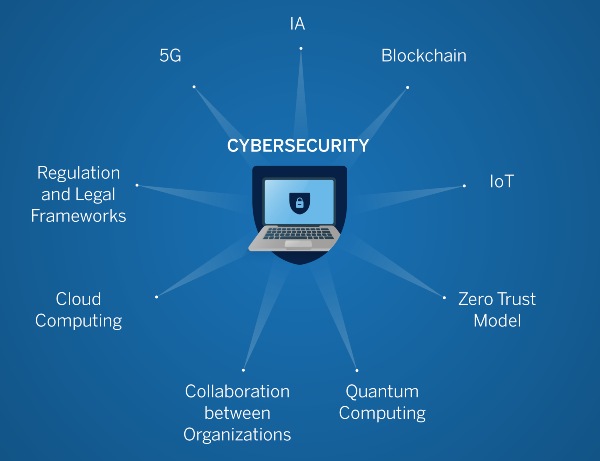
In the fast-paced digital age, the importance of cybersecurity cannot be overstated. As technology continues to advance and society becomes increasingly reliant on digital platforms, new trends and challenges emerge in the realm of cybersecurity. Understanding these developments is crucial for safeguarding our digital world.
Rising Cybersecurity Threats
With each passing day, cyber threats are becoming more sophisticated and prevalent. Hackers and cybercriminals are constantly evolving their tactics to exploit vulnerabilities. These are some of the cybersecurity trends and challenges we face in the digital age:
1. Ransomware Attacks
Ransomware attacks have gained notoriety in recent years. These attacks involve encrypting a victim’s data and demanding a ransom for its release. Hospitals, government agencies, and businesses of all sizes have fallen prey to these attacks, which can result in data loss, financial damage, and reputational harm.
2. Phishing Attacks
Phishing attacks continue to be a significant threat. Cybercriminals use social engineering techniques to trick individuals into revealing sensitive information, such as login credentials and financial data. Phishing attacks have become more sophisticated, making them harder to detect.
3. IoT Vulnerabilities
The Internet of Things (IoT) has brought about incredible convenience, but it has also introduced security challenges. Many IoT devices lack robust security measures, making them vulnerable to exploitation. These devices can be used as entry points for cyberattacks.
4. Insider Threats
Insider threats are a persistent concern. Malicious or negligent employees and contractors can pose significant risks to organizations by sharing sensitive information or compromising security from within.
Cybersecurity Trends
In response to these challenges, several key cybersecurity trends have emerged to enhance digital defense:
1. Artificial Intelligence and Machine Learning
Artificial intelligence (AI) and machine learning (ML) are being used to identify and respond to threats in real time. These technologies can analyze vast amounts of data to detect anomalies and patterns that may indicate a cyberattack.
2. Zero Trust Security Model
The zero trust security model is gaining traction. It operates on the principle of «never trust, always verify.» In this model, all users and devices, both inside and outside the network, are treated as untrusted until their identity and security posture are verified.
3. Multi-Factor Authentication (MFA)
MFA is becoming a standard security practice. It adds an additional layer of protection by requiring users to provide multiple forms of authentication, such as a password, biometric data, or a smart card, before gaining access to systems or data.
4. Cloud Security
As more organizations migrate to the cloud, cloud security has become a top priority. Ensuring the security of data and applications hosted in the cloud is essential. This includes encrypting data, managing access controls, and monitoring for unauthorized activity.
5. Cybersecurity Workforce Development
The shortage of cybersecurity professionals is a growing concern. Efforts to train and develop a skilled workforce are increasing. This includes initiatives to attract and educate the next generation of cybersecurity experts.
Regulatory Compliance
Governments and regulatory bodies around the world are implementing stricter data protection and privacy regulations. Compliance with these regulations, such as GDPR in Europe and CCPA in California, is a critical component of cybersecurity strategy.
Challenges for the Future
The future of cybersecurity presents both opportunities and challenges. Some key challenges include:
1. Quantum Computing Threats
Quantum computing, when fully realized, may have the capability to break current encryption methods. Preparing for the post-quantum era is a challenge that cybersecurity experts are actively addressing.
2. Increasing Attack Surface
The proliferation of IoT devices and the expansion of digital ecosystems are broadening the attack surface for cybercriminals. Protecting these diverse endpoints is a significant challenge.
3. Human Error
Human error remains a leading cause of security breaches. Addressing this challenge requires ongoing education and awareness programs.
Conclusion
Cybersecurity is a dynamic field, and its importance continues to grow in the digital age. Understanding the evolving threats and trends is essential for individuals and organizations alike. By adopting advanced security practices, leveraging emerging technologies, and staying informed about cybersecurity developments, we can better protect our digital assets and preserve the integrity of the digital world we rely on.
In summary, as digital technology continues to evolve, the landscape of cybersecurity evolves with it. Staying ahead of cyber threats and addressing the challenges presented in the digital age are essential for individuals, organizations, and society as a whole.